Prateek Tanmay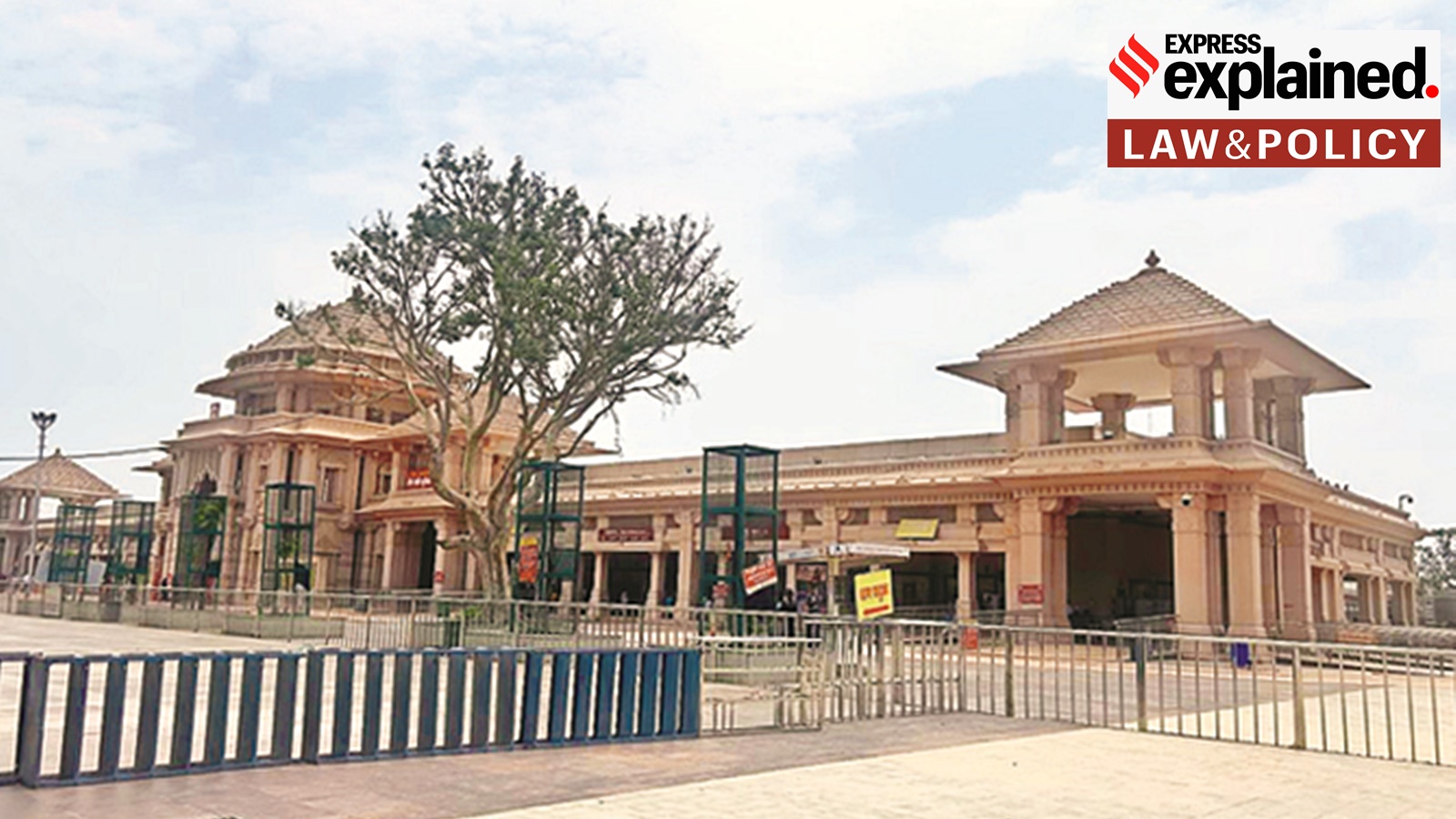
The Ayodhya Bar Association on Monday (June 29) announced that none of its lawyers will defend the eight accused booked for the alleged embezzlement of funds for the Ram temple. The association said it would impose a Rs 5 lakh fine on lawyers if they represent them.
This is not the first time that lawyers’ bar associations have passed such resolutions despite Supreme Court rulings stating they were “against all norms of the Constitution, the statute and professional ethics”.
Article 22(1) of the Constitution gives every person the fundamental right not to be denied the right to consult, and to be defended by a legal practitioner of his choice.
Article 14 provides for equality before the law and equal protection of the laws within the territory of India. Article 39A, part of the Directive Principles of State Policy, also requires the state to ensure that the legal system promotes justice. It states that the state should also ensure that equal opportunity to secure justice is not denied to any citizen by reason of economic or other disabilities, providing for free legal aid.
What has the Supreme Court said about such resolutions?
In 2010, while hearing an appeal against the order of the Madras High Court, a Supreme Court bench of Justices Markandey Katju and Gyan Sudha Mishra had dealt with the illegality of resolutions passed by bar associations at length.
The case arose from a confrontation between a lawyer and policemen in Coimbatore in 2006, after which lawyers passed a resolution not to allow any lawyer to represent the police personnel. The Madras High Court ruled this “unprofessional”, after which lawyers appealed in the Supreme Court.
Story continues below this ad
During the appeal (A S Mohammed Rafi vs State of Tamil Nadu), the apex court said that this issue of “great legal and constitutional importance” had caused “deep distress” to the bench. “In our opinion, such resolutions are wholly illegal, against all traditions of the bar and against professional ethics. Every person, however, wicked, depraved, vile, degenerate, perverted, loathsome, execrable, vicious or repulsive he may be regarded by society has a right to be defended in a court of law and correspondingly, it is the duty of the lawyer to defend him,” the court said.
The Supreme Court referred to writer Thomas Paine, who was tried for treason in England in 1972. Thomas Erskine, Attorney General for the Prince of Wales, was warned of dismissal if he defended Paine, but he still took the brief, saying: “… If the advocate refuses to defend from what he may think of the charge or of the defence, he assumes the character of the Judge…”
The Supreme Court cited other historical examples of accused being defended — revolutionaries against British rule, alleged assailants of Mahatma Gandhi and Indira Gandhi, and Nazi war criminals at the Nuremberg trials charged with killing millions.
The Supreme Court judgment authored by Justice Katju further referred to the Independence struggle, where revolutionaries against British rule were defended. The court had said that it was “disturbed” by news reports of bar associations refusing to defend certain accused persons: “Professional ethics requires that a lawyer cannot refuse a brief, provided a client is willing to pay his fee, and the lawyer is not otherwise engaged.
Story continues below this ad
Hence, the action of any Bar Association in passing such a resolution that none of its members will appear for a particular accused, whether on the ground that he is a policeman, or on the ground that he is a suspected terrorist, rapist, mass murderer, etc is against all norms of the Constitution, the statue and professional ethics,” the court said, calling such resolutions “a disgrace to the legal community”.
It declared such resolutions as null and void, stating that “..right minded lawyers should ignore and defy such resolutions if they want democracy and rule of law to be upheld in this country.”
How are professional ethics of lawyers defined?
The Bar Council of India has Rules on Professional Standards, part of the Standards of Professional Conduct and Etiquette to be followed by lawyers under the Advocates Act. An advocate is bound to accept any brief in the courts or tribunals, at a fee consistent with his standing at the Bar and the nature of the case.
Story continues below this ad
The rules do provide for a lawyer refusing to accept a particular brief in “special circumstances”. Last year, the Uttarakhand High Court clarified that these refer to an individual advocate who may choose not to appear in a particular case. But he cannot be prohibited from defending an accused by any threat of removal of membership of the bar association.
Are resolutions not to defend an accused common?
Various bar associations across the country have time and again passed resolutions to prevent representation of accused. These are usually cases of rape and murder of women and minors, terror cases, as well as those of attacks on lawyers.
A similar resolution was passed against representing Ajmal Kasab, the lone terrorist arrested for the 2008 terror attacks in Mumbai. A legal aid lawyer assigned the case refused to represent Kasab, while another who agreed to defend him was threatened by a political party. Subsequently, a lawyer was appointed and accorded police security.
Story continues below this ad
After the December 16, 2012 Delhi gangrape case, a similar resolution was passed by Saket court lawyers. The four men accused in the rape and murder of a 26-year-old veterinary doctor in Hyderabad in 2019 were also refused representation by the bar association. They were subsequently killed in an alleged encounter.
The Supreme Court had in 2017 directed lawyers of the Gurgaon District Bar Association not to obstruct any lawyer defending the accused in the murder case of a seven-year-old boy in a school in Gurugram. The police had arrested a bus conductor but subsequently apprehended a juvenile from the school for the crime.
Have lawyers faced action for such resolutions?
A writ petition was filed in the Uttarakhand High Court in 2019 after the Kotdwar Bar Association passed a resolution stating that anyone who represents the accused in the murder case of an advocate will have his membership to the bar terminated. The court held the resolution null and void.
It directed the State Bar Council to initiate action against office-bearers of the Bar Association if such resolutions are passed in the future. It also said that action against advocates who interrupt court proceedings can be considered under Section 15(2) of the Contempt of Courts Act, 1971.
Story continues below this ad
In 2020, the Karnataka High Court observed that it was unethical and illegal for lawyers to pass resolutions against representing accused in court, after local bar associations objected to four students arrested for sedition being defended in court.