Prateek Tanmay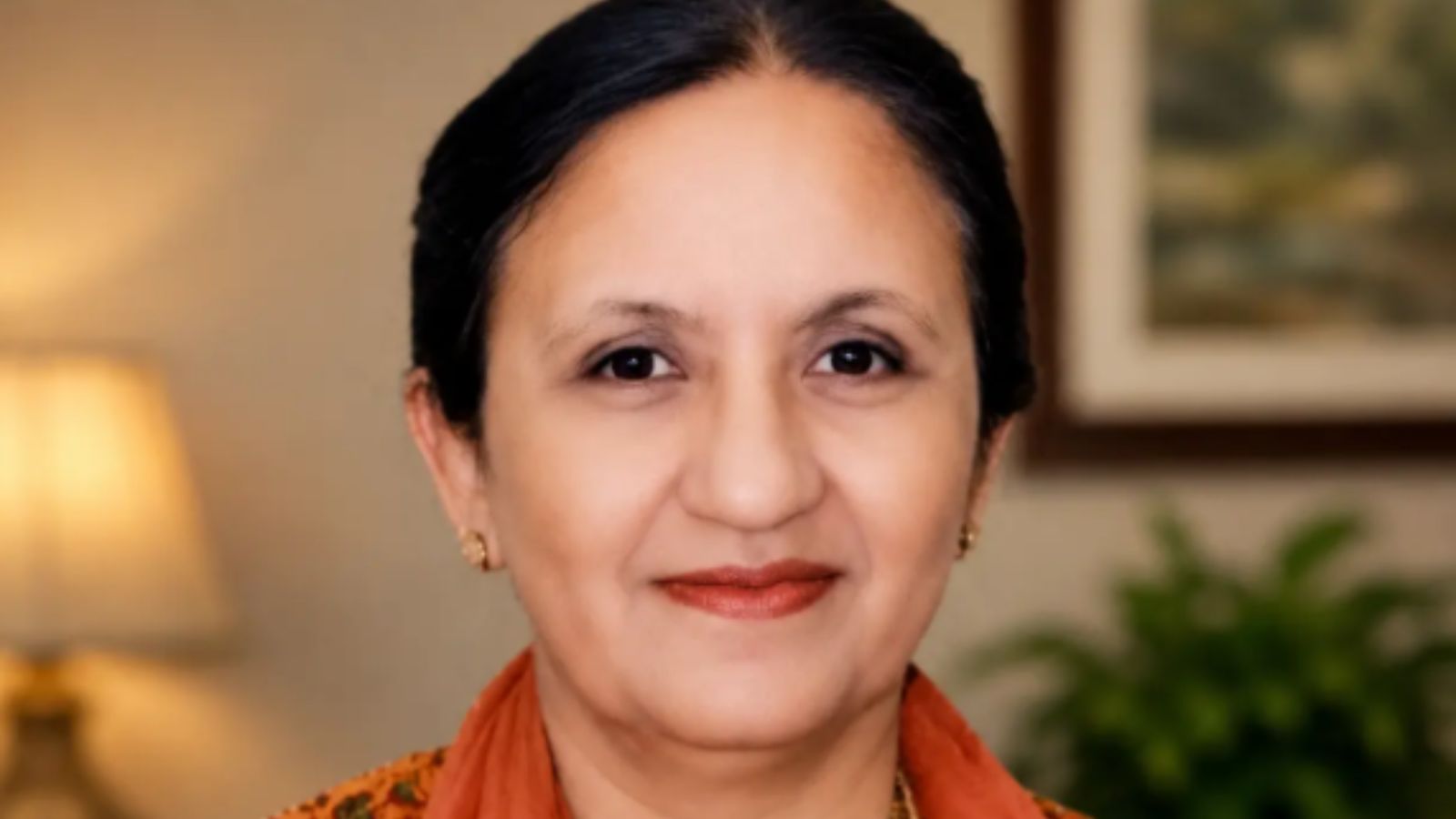
Former chief architect Ar Sumit Kaur, who led the technical formulation of the Chandigarh Master Plan (CMP) 2031, has sought the withdrawal of the draft amendments to the plan, arguing that they would fundamentally alter the city’s planning philosophy, compromise its heritage character and overburden its infrastructure.
Kaur submitted a detailed 20-page representation to the Chief Architect and made oral submissions before the Screening Committee on June 26, urging the Administration to either withdraw or keep in absolute abeyance the draft amendments notified on May 22 and supplemented on May 29.
A member of both the Board of Inquiry and Hearing and the Chandigarh Heritage Conservation Committee (CHCC), Kaur argued that the proposed changes go far beyond routine planning revisions and amount to a wholesale recasting of Chandigarh’s urban form.
The amendments, introduced under the Administrator’s approval as part of land deregulation measures, propose substantial increases in Floor Area Ratio (FAR), building heights of up to 30 metres, mandatory stilt-plus configurations, expanded mixed land use, industrial zoning changes and higher-density development in peripheral areas.
Kaur contended that these proposals are unsupported by infrastructure studies, contradict the statutory framework of CMP 2031 and ignore the recommendations of the Government of India-approved Expert Heritage Committee, which form part of the Master Plan.
In her representation, she described Chandigarh as an integrated urban organism whose different sectors and phases function as one interconnected system. She argued that protecting only Phase I while allowing high-density development in Phases II and III was a planning fallacy because all three phases depend on the same road network, water supply, electricity and sewerage systems.
According to her, introducing high-rise and high-density development in later phases would inevitably strain shared infrastructure and undermine the city’s defining low-rise skyline, green character and uninterrupted views of the Shivalik hills.
Story continues below this ad
Among the proposed changes she flagged were increasing the FAR for Phase III group housing from 1.2 to 3.0, introducing mandatory stilt-plus-four housing in Phase II, increasing FAR for institutional and educational buildings and permitting buildings up to 30 metres high in areas such as Sarangpur and Educity.
She also objected to proposals for high-rise development in Maloya Pocket 7 and higher-density housing in Manimajra Pocket 6, arguing that they were inconsistent with the Master Plan’s own assessment that Manimajra had already exceeded its carrying capacity.
Kaur further criticised proposed industrial amendments, including a uniform FAR of 2.0, increased ground coverage and expansion of mixed land use along Vikas Marg, saying they would encourage unplanned intensification and dilute carefully evolved planning controls.
One of her principal objections was the absence of supporting technical data. She noted that no Statement of Objects and Reasons, infrastructure audit or carrying-capacity assessment had accompanied the draft amendments. Referring to reports that a consultant had been appointed to study Chandigarh’s carrying capacity only after the amendments were notified, she argued that planning norms should be based on scientific studies rather than determined in advance.
Story continues below this ad
The CMP 2031, she pointed out, had fixed Chandigarh’s terminal holding capacity at around 16 lakh people after assessing the city’s water supply, sewerage, drainage and power infrastructure. Increasing FAR across large parts of the city without corresponding upgrades, she said, would place unsustainable pressure on civic services.
Her representation also raised concerns about seismic safety, noting that Chandigarh falls in Seismic Zone IV and that widespread stilt-plus construction could create soft-storey vulnerabilities during earthquakes. She argued that taller buildings would also affect solar access, natural ventilation and the city’s microclimate while increasing the urban heat-island effect.
She further said higher-density development would strain neighbourhood parks, schools and health facilities and weaken the community-oriented planning principles that have defined Chandigarh since its inception.
Kaur also argued that the draft amendments were inconsistent with recent judicial pronouncements. She referred to the Punjab and Haryana High Court’s judgment in Jagwant Singh Bath v. Union of India delivered on May 29 this year, which reaffirmed that the Master Plan is binding on all authorities and that heritage considerations extend across the city. She also cited the Supreme Court’s 2023 judgment in Residents Welfare Association v. U.T. Chandigarh, which emphasised infrastructure carrying-capacity assessments and scrutiny by the Chandigarh Heritage Conservation Committee before major planning changes. Referring to the Tata Camelot judgment, she said the apex court had already rejected high-rise development that would obstruct Chandigarh’s relationship with the Shivalik hills.
Story continues below this ad
Drawing comparisons with cities such as Brasília, Washington, Paris and Vienna, Kaur argued that internationally recognised heritage cities had accommodated growth without altering their historic urban form. Chandigarh, she said, should similarly manage future growth through regional planning rather than by increasing densities within the city.
She recommended a density freeze in Phases II and III, implementation of an inter-state regional development strategy to distribute future growth to satellite towns and execution of pending provisions of CMP 2031 instead of rewriting its core planning framework.
Before any amendments are considered, she urged the Administration to place in the public domain eight technical studies, including infrastructure carrying-capacity audits, traffic impact assessments, environmental and ecological studies, seismic vulnerability assessments, updated population projections, social infrastructure analyses, microclimate and shadow studies, and a comprehensive Heritage Impact Assessment.
In her formal recommendations, Kaur urged the Administration to withdraw or defer the amendments, reaffirm the primacy of CMP 2031, make all technical studies public, route any future changes through the Chandigarh Heritage Conservation Committee, implement pending provisions of the existing Master Plan and pursue a legally binding regional planning framework with neighbouring states.
Story continues below this ad
“Chandigarh is not a mere real-estate grid to be optimised for floor area. It is a living inheritance and an international urban monument,” Kaur said in her representation, adding that the city’s development pressures should be addressed through disciplined implementation of the existing Master Plan and regional coordination rather than by rewriting the principles that have shaped Chandigarh for more than seven decades.