Prateek Tanmay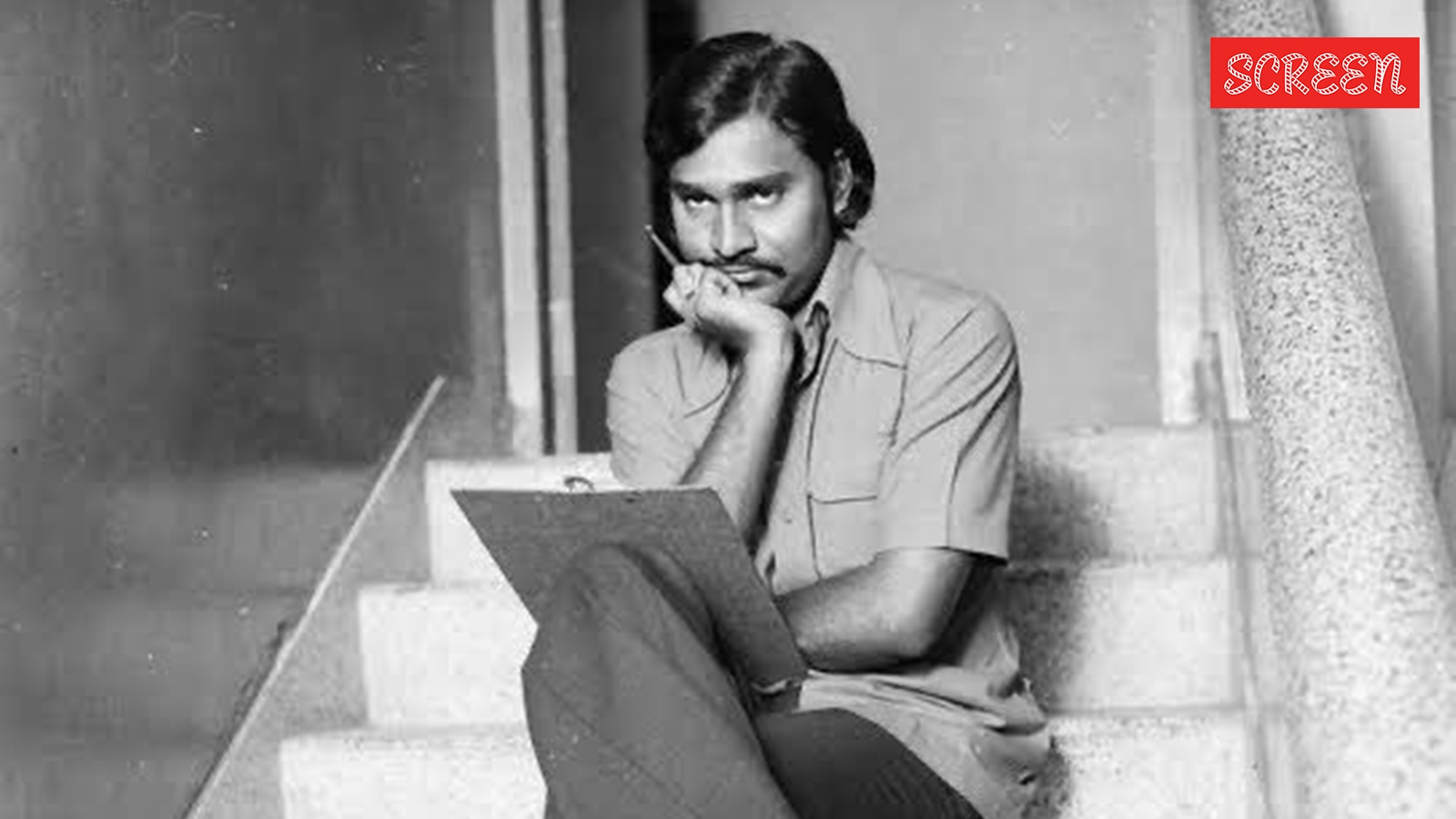
4 min readHyderabadJun 27, 2026 07:33 PM IST
Of all the titles K Bhagyaraj earned over a five-decade career as an actor, director and producer, one endured more than any other: “Thirai Kathai Mannan” — the King of Screenplays. At a time when Tamil cinema was dominated by larger-than-life heroes who could outrun trains and out-punch villains twice their size, Bhagyaraj built an entire career on the opposite idea, that a film could hold an audience just as tightly with a smart, ordinary man whose only real weapon was the screenplay itself.
That philosophy shows up clearly in Andha 7 Naatkal, released in 1981 and still cited today as one of the standout examples of screenplay craft in Tamil film history. The story follows Bhagyaraj’s character, a young man named Palakkad Madhavan who hopes to make it as a music director, falling for a woman whose family pushes her into marrying someone else instead.

Rather than resolving the story through confrontation or revenge, the film builds toward a climax in which the woman’s husband, on discovering the truth, offers to step aside so she can reunite with her old love, only for Madhavan himself to refuse the offer. It remains one of the most devastating endings in Tamil cinema.
What made 1981 a remarkable year in his career was not just that one film, but the range across several of them released within months of each other, spanning romance, family drama, comedy and suspense. Few writer-directors of that period demonstrated that kind of versatility within a single calendar year, let alone while also acting in the lead roles themselves.
Also Read: Bhagyaraj Death Updates: Rajinikanth hugs son Shanthanu; CM Vijay pays last respects
Mundhanai Mudichu, which arrived two years later in 1983, extended the same instincts into a story about a young widow navigating remarriage in a conservative village setting, again finding dramatic tension not in spectacle but in social pressure, timing and the calculations ordinary people make under constraint.
Mouna Geethangal, meanwhile, took on more uncomfortable emotional territory, following a married couple, played by Bhagyaraj and Saritha, whose relationship collapses after the husband’s mistake, and tracing their eventual, hard-won reunion years later without softening the ego and hurt that drove them apart in the first place.
Story continues below this ad
Across these films, certain patterns reccur enough to count as a signature. His protagonists, almost always played by himself, were rarely physically imposing or socially powerful, often standing in clear contrast to a more conventionally attractive or wealthy rival, with wit, emotional intelligence and a sense of timing serving as their actual advantage. His scripts leaned on tightly constructed plotting, frequently built around a ticking clock, a hidden truth, or a social complication that had to be resolved within a fixed window, paired with dialogue that mixed sharp wordplay with the kind of double-meaning humour that could land with an entire family audience without tipping into vulgarity.
Crucially, his social commentary, on caste, class, gender expectations or the conservatism of village life, was almost always delivered through the texture of family relationships rather than as a standalone message, which is part of why his films found such a wide, multigenerational audience in their time.
That writing-first sensibility also shaped the people who came up around him. Several filmmakers who went on to have notable careers of their own, including KS Ravikumar and R Parthiban, began as his assistants, carrying forward a working method that treated the screenplay, not the star, as the actual engine of a film.