Prateek Tanmay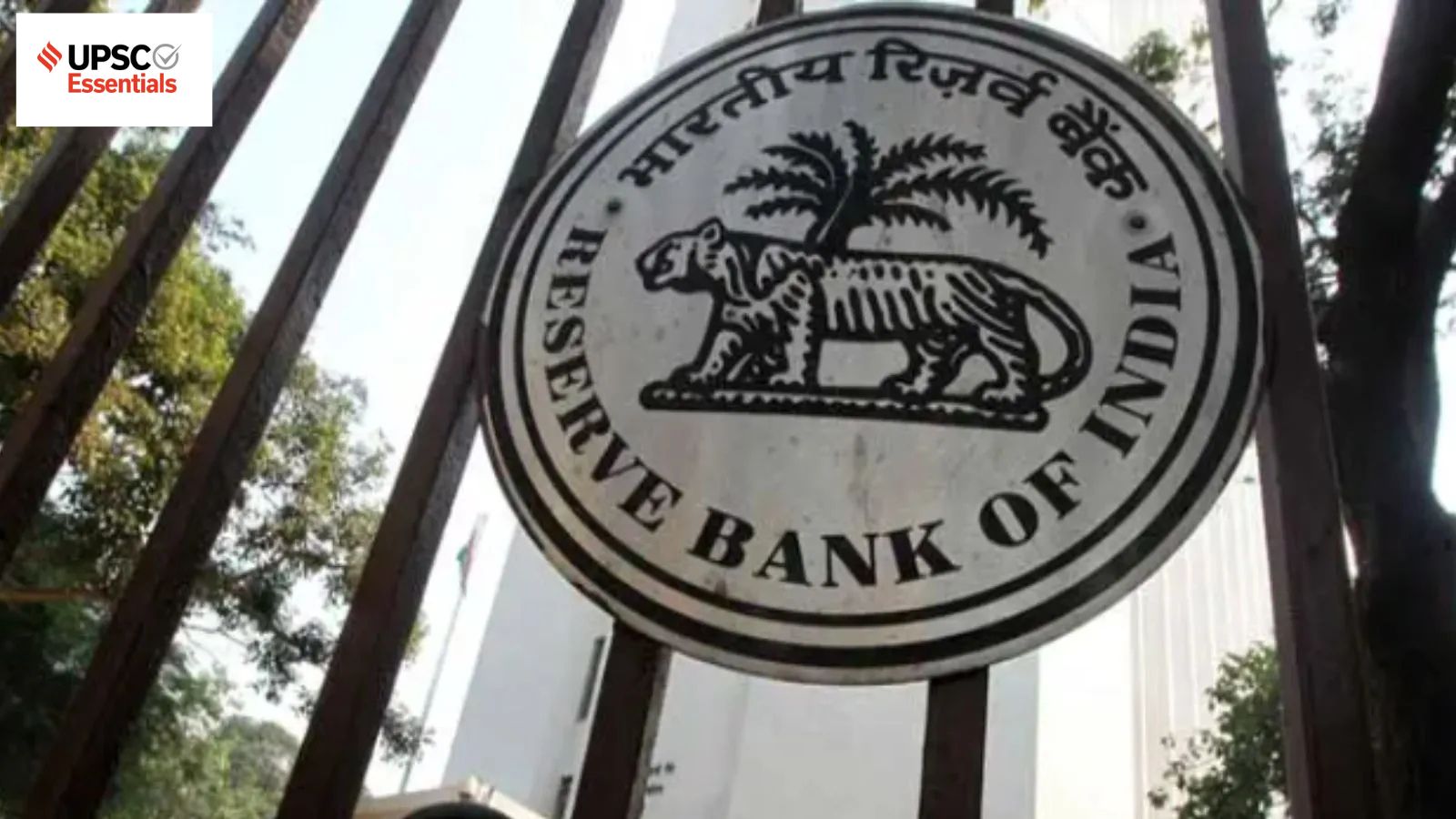
UPSC Essentials brings to you its initiative of subject-wise quizzes. These quizzes are designed to help you revise some of the most important topics from the static part of the syllabus. Attempt today’s subject quiz on the Economy to check your progress.
🚨 Click Here to read the UPSC Essentials magazine for June 2026. Share your views and suggestions in the comment box or at manas.srivastava@indianexpress.com🚨
With reference to the RBI’s digital fraud compensation framework, consider the following statements:
1. Victims of small-value fraudulent digital transactions may receive compensation up to ₹25,000 or 85% of the fraud amount, whichever is lower.
2. Compensation may be available even if the customer shared a One-Time Password (OTP) with the fraudster.
3. The framework proposes compensation for all digital fraud cases irrespective of the amount involved.
Which one of the following conclusions based on the above statements is correct?
(a) All three statements are correct.
(b) There are two correct statements, that include statement 1.
(c) There is only one correct statement.
(d) There is no correct statement.
Story continues below this ad
Relevance: The topic highlights the RBI’s role in consumer protection and digital payment regulation. It is relevant to questions on cybersecurity, digital payments, and financial inclusion.
Explanation
— Under the Reserve Bank of India’s revised compensation mechanism, victims of digital payment fraud involving amounts up to Rs 50,000 can recover a major portion of the money lost to fraud. The new framework, under which the RBI has offered to compensate a substantial portion, comes at a time when bank frauds, especially digital transaction frauds, have become a growing concern for the RBI. In FY26, while the reported fraud cases more than halved to 10,114, the amount involved rose 46% to Rs 48,021 crore.
— The central bank has attempted to make the new compensation guidelines strongly pro-consumer. The RBI will contribute the major part of the compensation under the new framework.
— Under the new mechanism, victims are eligible for compensation of up to 85% of their losses, up to Rs 25,000, thereby reducing the hit they take from such frauds. A bona fide victim who lodged a complaint involving gross loss of an amount up to Rs 50,000 on account of a fraudulent electronic banking transaction (EBT) will be compensated 85% of the net loss amount or Rs 25,000, whichever is less, once during the lifetime, the RBI’s new framework reads. Hence, statement 1 is correct.
Story continues below this ad
— For a complaint involving a loss of less than Rs 29,412 via fraudulent EBT, the customer will receive 85% of the amount as compensation. Victims are eligible for such compensation only if they lodge a complaint regarding the fraud within five calendar days. The loss must also be established in accordance with the internal processes set out in the victim’s bank’s policy.
— Close to 65 per cent of frauds involve amounts less than Rs 50,000, and customers will be eligible to get pay-outs in fraud cases even if they have shared a one-time password (OTP). Hence, statement 2 is correct.
— The proposal is aimed at small-value digital frauds and does not cover all digital fraud cases irrespective of amount. Hence, statement 3 is not correct.
Therefore, option (b) is the correct answer.
QUESTION 2
With reference to the Forex swap for deposits, consider the following statements:
Story continues below this ad
1. In India, the Reserve Bank of India provides a forex swap for the deposit received.
2. The facility is a plain buy/sell foreign exchange swap from the RBI side, covering only the principal amount of the deposits and not the interest component.
3. The bank will be allowed to undertake swaps for tenors of less than two years.
How many of the statements given above is/are correct?
(a) Only one
(b) Only two
(c) All three
(d) None
Story continues below this ad
Relevance: The RBI has revived a forex swap facility for FCNR(B) deposits, making it important for understanding RBI’s tools to manage foreign exchange reserves and external-sector liquidity. UPSC can frame questions on FCNR(B) deposits, forex swaps, NRI banking instruments, and balance of payments management.
Explanation
— The Reserve Bank of India (RBI) said Indian banks, including their overseas branches, are permitted to extend loans to non-resident account holders or even issue Standby Letters of Credit (SBLC) in favour of overseas lenders against FCNR(B) deposits mobilised under the new swap facility.
— The regulator has said that this permission is in addition to existing provisions that already allow banks to extend secured or unsecured credit and issue guarantees under normal banking norms.
— The RBI, in its clarification issued as frequently asked questions (FAQ), said banks are permitted to extend loans to the FCNR (B) account holders and mark lien on such deposits. Lien is a legal claim or right over someone else’s property until a debt or obligation is paid.
Forex swap for deposits
Story continues below this ad
— The RBI will be providing a forex swap for the deposit received. The facility is a plain buy/sell foreign exchange swap from the RBI side covering only the principal amount of the deposits and not the interest component. “The bank will be allowed to undertake swaps for tenors of less than three years provided they have mobilised fresh eligible FCNR (B) deposits for minimum original tenor of three years as per the scheme,” it said. Hence, statements 1 and 2 are correct and statement 3 is not correct.
— Interest rates on deposits, including where differential rates of interest are offered, will be subject to compliance with paragraph 32(2) of the Reserve Bank (Commercial Banks – Interest Rate on Deposits) Directions, 2025.
— Banks will continue to offer regular FCNR (B) deposits, without availing swap facility, for customer deposits with a tenor of 3 years and above up to 5 years, without the requirement of a minimum lock-in period of one year. However, records shall be maintained separately, it said.
Therefore, option (b) is the correct answer.
QUESTION 3
Consider the following statements:
1. Bitumen is crucial for road construction, with India’s import dependency around 35 per cent.
Story continues below this ad
2. Most of India’s bitumen imports are dependent on West Asia.
3. Bitumen is a petroleum-derived product, and its prices are closely linked to crude oil market dynamics.
Which one of the following conclusions based on the above statements is correct ?
(a) All three statements are correct.
(b) There are two correct statements, that include statement 1.
(c) There is only one correct statement.
(d) There is no correct statement.
Relevance: Bitumen is a key input for road infrastructure development, making it relevant under infrastructure and economic geography topics. UPSC may frame questions on the distinction between bitumen, crude oil, petroleum products, and asphalt, as well as their implications for India’s import bill and infrastructure sector.
Explanation
Story continues below this ad
— The ongoing conflict in West Asia has hit India’s push to expand road infrastructure. Bitumen, crucial for road construction, was also caught in the crossfire just like oil and gas, with an import dependency ranging between 30 to 40%. Hence, statement 1 is correct.
— Bitumen is a petroleum-derived product, and its prices are generally influenced by crude oil market trends. The government has a target of building 10,000-km of highways in the ongoing financial year 2026-27. Additionally, 17,365 km of roads remain to be constructed under Pradhan Mantri Gram Sadak Yojana (PMGSY) Phase-III, a flagship scheme for rural infrastructure. Hence, statement 3 is correct.
— According to the Ministry of Petroleum and Natural Gas (MoPNG) data, India imported 2.36 lakh tonnes of bitumen in April 2026, compared to 2.97 lakh tonnes imported in April 2025 and 2.74 lakh tonnes imported in April 2024.
— India was not always as dependent on imports. The change has been driven by the mega road projects undertaken within the last decade, through schemes like Bharatmala (for enhancing road connectivity via expressways and economic corridors) and PMGSY.
— India requires almost 90 lakh tonnes of bitumen annually. Of this, around 54 lakh tonnes are produced domestically in the refineries of oil companies like IndianOil and Bharat Petroleum. The shortfall is met by imports from West Asia. Over 99% of India’s bitumen imports come from Iraq, UAE, Iran, Oman and Bahrain. Hence, statement 2 is correct.
Therefore, option (a) is the correct answer.
QUESTION 4
The term ‘Agriphotovoltaics’ refers to:
(a) Cultivation of crops exclusively beneath artificial lighting powered by solar energy.
(b) Conversion of agricultural residues into photovoltaic materials for solar panels.
(c) Installation of solar panels only on non-agricultural wastelands to avoid interference with farming.
(d) It integrates solar power generation and crop cultivation on the same piece of land.
Relevance: It is relevant to topics such as energy security, climate-smart agriculture, land-use efficiency, and the clean energy transition. UPSC may frame questions on its concept, advantages, and distinction from solar pumps, rooftop solar systems, and biomass-based energy technologies.
Explanation
— Agriphotovoltaics (Agri-PV) integrate solar power generation and crop cultivation on the same piece of land. This allows farmers to harvest both sunlight and crops. Solar panels are mounted at a height of about 3.5 metres, which permits cultivation beneath them while generating electricity for sale to discoms. The result is dual use of land and dual streams of income.
Therefore, option (d) is the correct answer.
QUESTION 5
With reference to the PM Viksit Bharat Rozgar Yojana (VBRY), consider the following statements:
1. It is an initiative designed to strengthen the aspirations of young people entering their first jobs.
2. The scheme is mainly focused on employers rather than employees.
Which of the statements given above is/are correct?
(a) 1 only
(b) 2 only
(c) Both 1 and 2
(d) Neither 1 nor 2
Relevance: The topic is important for questions on government schemes, labour market reforms, and social sector initiatives. UPSC may test its objectives, beneficiaries (employees and employers), incentives, and distinction from earlier employment-generation schemes.
Explanation
— Prime Minister Narendra Modi said that around 70 lakh jobs have been created so far under the Pradhan Mantri Viksit Bharat Rozgar Yojana (PM-VBRY) and out of these, about 20 lakh youths have already completed six months in their first job.
— The Prime Minister Viksit Bharat Rozgar Yojana is an initiative designed to strengthen the aspirations of young people entering their first jobs while creating a robust bridge between industry and the workforce. Hence, statement 1 is correct.
— Many schemes are typically focused either on employees or employers, this programme simultaneously supports both. The Government stands with young people beginning their professional journeys and encourages institutions that create new employment opportunities. Hence, statement 2 is not correct.
— The Prime Minister also expressed satisfaction over the participation of institutions and enterprises that have generated employment opportunities under the scheme. Employment generation gains momentum when the Government, industry, and youth work together. The initiative is a reflection of a new India where young people receive opportunities, industries receive encouragement, and employment generation becomes a national mission.
Therefore, option (a) is the correct answer.
(Other Source: pib.gov.in)
Previous Daily Subject-Wise-Quiz
Daily Subject-wise quiz — History, Culture, and Social Issues (Week 159)
Daily subject-wise quiz — Polity and Governance (Week 168)
Daily subject-wise quiz — Science and Technology (Week 168)
Daily subject-wise quiz — Economy (Week 167)
Daily subject-wise quiz — Environment and Geography (Week 167)
Daily subject-wise quiz – International Relations (Week 167)
Subscribe to our UPSC newsletter and stay updated with the news cues from the past week.
Stay updated with the latest UPSC articles by joining our Telegram channel – IndianExpress UPSC Hub, and follow us on Instagram and X.