Prateek Tanmay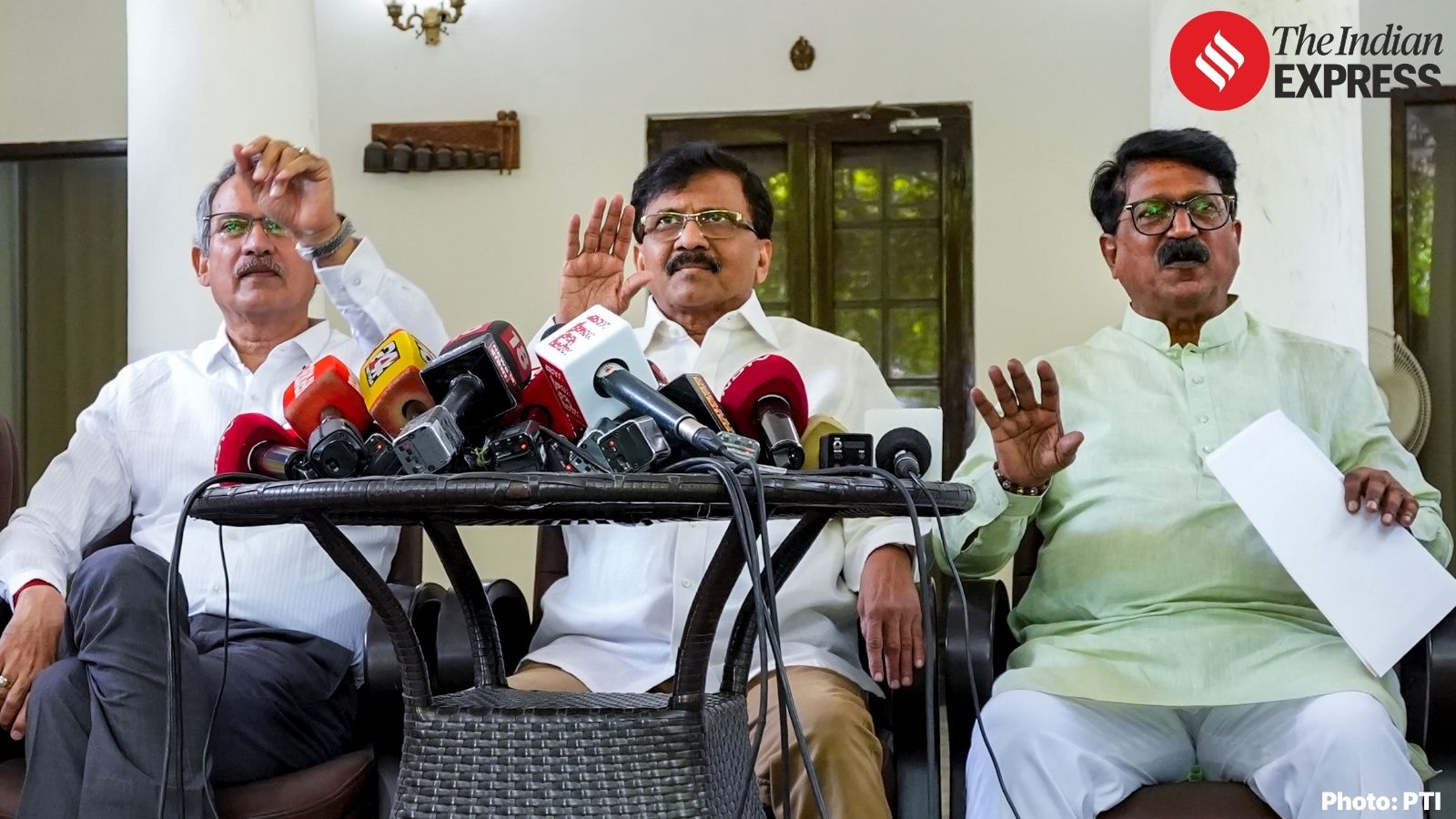
6 min readJun 19, 2026 01:52 PM IST
First published on: Jun 19, 2026 at 01:52 PM IST
The old saying “Aaya Ram, Gaya Ram” was coined in the 1960s for a reason: Legislators were wont to change sides when the prospect of office or influence presented itself. To put a stop to such goings-on, the anti-defection law was enacted in 1985 and later strengthened. Its purpose was to rein in horse-trading and inducements involving money and ministerial perches to bring about political realignments, which many considered unethical. Recent events in Maharashtra and West Bengal demonstrate that the problem persists; it has just taken on a different form. The ongoing internal ruptures and leadership contests among opposition parties raise questions regarding the health of India’s democratic institutions and the future direction of political rivalry. Four issues require consideration.
First, what is driving this fragmentation? It used to be the case that regional parties were deeply entrenched and hard to break; now they seem prone to division. Ideology may be part of it. A good number of these parties were built on caste coalitions, linguistic identity, or social movements. However, these underlying principles have diminished in significance as electoral campaigns have shifted towards emphasising the candidate’s individual persona. Entrusting our faith to a magnetic personality rather than to an organisation can make internal disputes become matters of survival, as loyalty centres on the individual rather than the institution.

Leadership is another factor. People need someone to provide direction and keep the cadres confident. If a leader seems indecisive or out of touch, especially after an electoral drubbing, factionalism will set in. The TMC’s implosion is perhaps the most dramatic illustration of this. However, there is an unpleasant reality to acknowledge: The influence of the prevailing power can be difficult to counter. Hence, the fragmentation may appear as a pragmatic reaction to existing incentives, rather than a manifestation of internal weakness or great-power manipulation.
The second thing to consider is what all this means for federalism. Are we seeing a drift toward centralisation? On the surface, with national parties asserting themselves in various regions, it might appear so. This tendency does not bode well for our complex polity. A decline in regional parties weakens the federal structure, reducing the representation of the varied interests it was originally meant to preserve. A robust federation requires diverse centres of political power to advocate for a region’s specific interests.
The data on this is not entirely clear, though. Look to southern India for a case in point: In places like Tamil Nadu, Telangana, and Kerala, there is still a strong sense of state-level identity and a vigorous regional political culture. The parties there are as influential and electorally viable as ever, which is a testament to the resilience of Indian federalism.
Nonetheless, one can see a change coming. A trend towards increased centralisation in leadership projection and dominant media/campaign narratives is evident. It is altering the relationship between the national and the regional. Despite the outward appearance of federal institutions functioning as intended, the competitive arena is trending toward nationalisation. Whether this is a fundamental change to federalism is debatable, but it is worth taking seriously.
Then there is the matter of the Opposition, and here things get more troubling. We appear to be accepting a democratic system with diminishing space for disagreement. Undoubtedly, democracy is majority rule. Still, its true value lies in protecting pluralism and institutionalising disagreement. Opposition gives an election its meaning; without it, we have ratification, not a contest of ideas.
It is pertinent to question whether the recent political realignments stem from a legitimate democratic procedure or the machinations of self-interested politicians. A defection is not undemocratic in itself. A legislator might have a real ideological difference with his party or think the leadership has let them down. But when it becomes a pattern, with everyone defecting toward the dominant force, one worries about the setting itself. Effective democratic operation necessitates more than simply having an Opposition; we need the conditions for it to survive and make its mark. Yet, this is the responsibility of the Opposition. Political arenas rarely see principles prioritised over opportunities for dominance. The horizon is limited; the calculations are consequential.
Corruption is the last of these concerns. It tends to surface when the political landscape fragments. Leaders will find themselves under investigation around the time of any major realignment. Be it a genuine case or one with political motives, it only feeds public cynicism. In the event the assertions are substantiated, an inquiry by an objective tribunal is warranted. Institutions, again, are not any different from people with ambition and the will to power. They cannot extirpate corruption through procedural fairness. The answer is to put some muscle back into our institutions rather than erode the competition. We need anti-corruption bodies that are beyond reproach, and parties that are ready to accept their verdict.
In the end, the breaking up of opposition parties is not merely a tale of unprincipled ambition or poor management. It pertains to representation and the principle of federalism. A democracy that exists solely in the Constitution offers little genuine democratic representation and consolidation. It is unproductive to assign fault to the dominant national party for the disintegration of regional factions. The Congress’s historical record of dealing with regional parties is demonstrably unsatisfactory. It is incumbent upon regional parties to analyse the reasons for their dissolution and identify measures that could prevent such occurrences in the future.
The writer teaches at Jadavpur University, Kolkata, and was the Eugenio Lopez Visiting Chair at the Department of International Studies and Political Science at Virginia Military Institute, US