Prateek Tanmay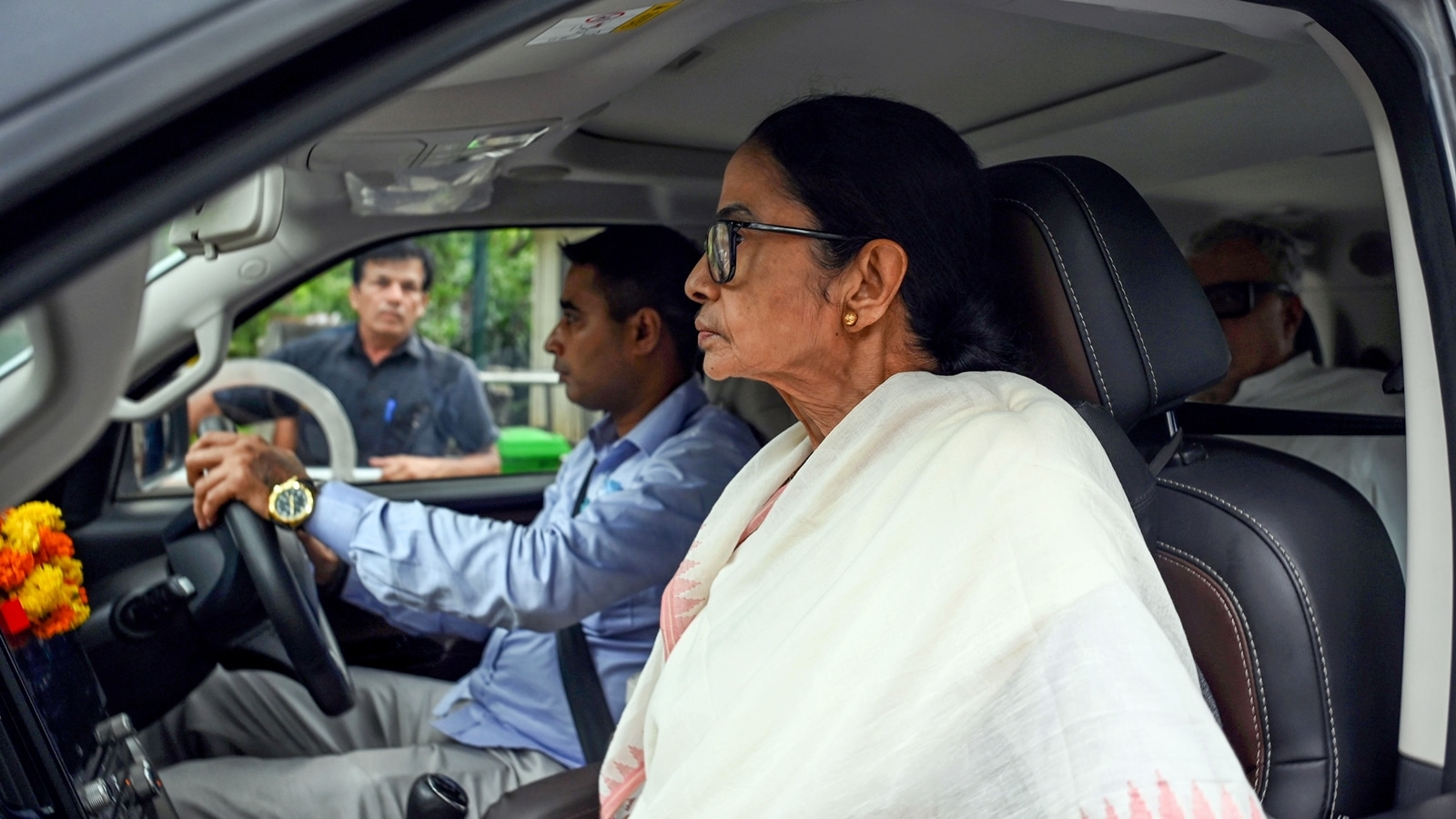
The political crisis engulfing the Trinamool Congress (TMC) has the potential to alter the Parliament arithmetic in ways that could have significant implications for the Narendra Modi government’s legislative agenda, including its plans to revive the contentious delimitation legislation during the forthcoming Monsoon Session.
With rebel leaders claiming the support of 20 of the TMC’s 28 Lok Sabha MPs, seven AAP Rajya Sabha MPs having already merged with the BJP earlier this year, and three more TMC members resigning from the Upper House amid the current turmoil, the Opposition’s parliamentary strength is undergoing its biggest realignment since the splits in the Shiv Sena in 2022 and the Nationalist Congress Party (NCP) in 2023.

The developments come at a time when the Opposition has already been weakened by the breakdown of the Congress-DMK alliance after the Congress aligned itself with Vijay’s Tamilaga Vettri Kazhagam (TVK) following the Tamil Nadu Assembly elections.
NDA could cross 300-mark in Lok Sabha
The NDA currently commands the support of about 293 MPs in the 543-member Lok Sabha. Rebel TMC leaders claim the support of 20 of the party’s 28 Lok Sabha MPs and have indicated their willingness to back the government. If those numbers hold, the government’s effective support base rises from 293 to 313 MPs.
The significance of the shift becomes apparent when viewed against the April vote on the delimitation-linked constitutional amendment. Despite retaining the support of all NDA constituents and receiving backing from several non-aligned parties, the government was able to secure only 298 votes and failed to pass the legislation.
The addition of 20 TMC MPs would theoretically raise the government’s demonstrated support base from 298 to 318 votes, substantially improving its position compared to the earlier attempt.
Congress-DMK split alters equation
What could add to this is the timing of the TMC crisis. It comes at a time when the Opposition’s parliamentary architecture is already under strain. The Congress-DMK alliance has collapsed following Congress’s decision to align with the TVK in Tamil Nadu.
The split weakens one of the strongest pillars of the INDIA bloc and opens the possibility of issue-based cooperation between the DMK and the government on specific legislative matters. The DMK has 22 Lok Sabha MPs.
If the party were to support a delimitation-linked constitutional amendment, the government’s potential support base would rise from 313 to 335 MPs. That would be just 25 short of the two-third majority in the current Lok Sabha.
The numbers game
The two-thirds mark in the full 543-member Lok Sabha is 362. However, three Lok Sabha seats are currently vacant – Basirhat in West Bengal, Shillong in Meghalaya and Nowgong in Assam – reducing the effective strength of the House to 540. That brings the effective two-thirds threshold down to 360.
While 335 would still not guarantee the passage of a constitutional amendment, it would place the government within striking distance of the required numbers and provide the BJP leadership with a considerably stronger platform for floor management on the day of voting.
In practical terms, the government would no longer need to build an entirely new coalition around a constitutional amendment. Instead, it would need to secure a much smaller number of additional votes through support, abstentions or absences in the Opposition ranks.
Immediate impact in Rajya Sabha
The Upper House numbers are evolving in stages. The BJP’s strength had already risen to 113 after the merger of seven former AAP Rajya Sabha MPs. The NDA’s tally consequently climbed to around 148 members.
The TMC crisis has now created a second opening. Three TMC Rajya Sabha MPs have resigned, reducing the party’s strength from 13 to 10 and creating three vacancies.
If NDA-backed candidates secure all three seats in ensuing by-elections, the NDA’s tally would rise from approximately 148 to 151. The two-third majority mark in the Rajya Sabha is 163 members.
West Bengal and the long game
The more consequential development lies in the West Bengal Assembly. Rebel leaders claim the support of 58 of the TMC’s 80 MLAs, leaving Mamata Banerjee with only 22 legislators.
Those numbers have direct implications for future Rajya Sabha elections. Under the Rajya Sabha electoral formula, a party’s ability to elect MPs depends on the number of MLAs it has in the state Assembly. With only 22 MLAs, the Mamata Banerjee faction would struggle to elect a Rajya Sabha member independently in future election cycles.
The TMC’s current Rajya Sabha contingent may not disappear immediately, but it could steadily shrink as existing members complete their terms. West Bengal’s next major Rajya Sabha retirement cycles are due in 2029, 2030 and 2032.
If the present alignment remains intact and the rebel bloc continues to support the NDA, many of those seats could eventually move out of the Opposition column and into the government’s orbit.