Prateek Tanmay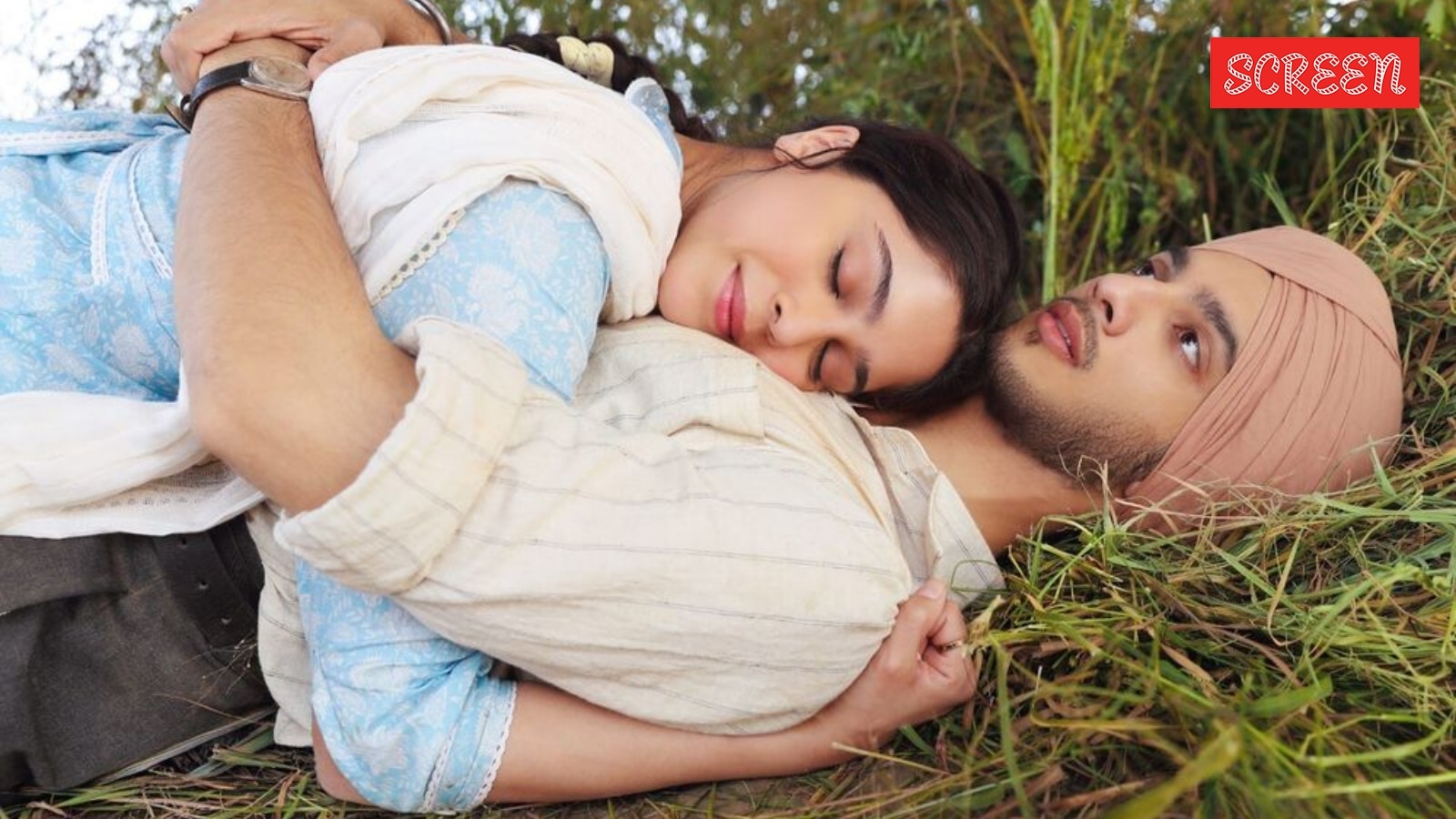
Main Vaapas Aaunga movie review: Two love stories spanning two eras is a running theme in Imtiaz Ali’s filmography. His latest, ‘Main Vaapas Aaunga’, a pre-Partition for ever-and-ever romance, juxtaposed against a commitment-phobic present-day couple—in which the girl and guy are doing the back-and-forth chancy-dancy thing, is also in the same zone. It also re-unites him with Diljit Dosanjh, the lead actor of their previous collaboration, Chamkila.
Co-written by Ali and Nayanika Mahtani, the film opens with the Chandigarh-based 95-year old Ishar Singh Grewal (Naseeruddin Shah) desperate to get to Sargodha. His faculties are slipping, and he has no realisation that the town lies across the border, created in 1947 to carve India and Pakistan out of the subcontinent, leading to wholesale carnage and bloodshed.

His incoherent mumblings can only be deciphered by grandson Nirvair (Diljit Dosanjh), who has flown in from the UK, leaving behind a job, a girlfriend (Banita Sandhu) and tangled emotions of his own. Dadaji has unfinished business, and as he clings desperately on despite the debilitating stroke, he becomes the device through which the film harks back to those terrible times which have been buried in the memories of those who lived through them.
That Ali is able to make this film in 2026, with spiralling communal polarisation having created so many fissures within our own country, is astounding, and a straight up cause for celebration. Main Vaapas Aunga is very clear about where its politics lies, pointing towards the unresolved trauma and unhealed wounds transmitted through generations, as the root cause of our present troubles. It also includes a clear-eyed declaration that those troubles cannot be laid at the door of one community or one religion: everyone — the Muslim marauders who raped and pillaged, the Sikhs who retaliated, the blood-lust leading to beheadings — was responsible, everyone was complicit, and everyone’s hands were equally bloody.
To dig up those skeletons, and to tell those stories, so that we can look back with lessening anger, can be healing. In that sense, Main Vaapas Aaunga is a valuable addition to the films that do the difficult work of acting as memorial and redemption.
But while its intentions are noble, and its heart is very much in the right place, the film meanders, especially in the first half. It does make up for it in the post-interval section, when it gets into full gear, but that makes us wish, all the more, that all of it was tighter, especially with its rousing climactic coda about forgetting as way to forgiveness, and that being a pacifist is the only way forward.
The film works best when it nudges us into accepting that those feelings are important, and those moments come flooding well into the second half, in which Main Vaapas Aaunga finds its footing, as it goes back and forth, coasting on nostalgia for a softer, gentler era in which a lost chaand-baali could become an excuse for a clandestine meeting between lovers from different religions.
Story continues below this ad
Where it fails to leave a mark is the creation of that very same long-lost love : there’s not enough fizz between the fresh-faced Vedang Raina and rosy-cheeked Sharvari, the former playing the college-going Ishwar and the latter his beloved Jiya, whom he has to leave behind when the violence erupts.
These portions, with their studied flirtation between the young uns, the hardening of lines destroying the harmony between the Muslims and the Sikhs who had lived in harmony, the horrific violence wrecked on the women left behind, are all familiar: we’ve seen similar depictions.
Where the film stands out is in the clear acknowledgement of guilt of those that left, the lingering curses of those left behind, the burden of which Ishwar has carried all these years, which has perhaps corroded his future relationships. There’s an interesting thread hinting at the conflicted feelings of Ishwar’s older son (Rajat Kapoor), which he brings up when he sees the former stricken by stroke; the film leaves this thread unexplored.
The plot is stuffed with everything the film wants to touch upon, including a pointed scene involving farmers and their constraints (a reference to Dosanjh’s support for the farmers?): that scene comes and goes, without having anything to do with the film. Dosanjh being named Nirvair is a lovely meta-touch, speaking to one that doesn’t hate, only loves: a degree of equal elegance is missing in the way his character is turned into a bald explainer on what his grandfather is going through, as well as the Partition itself. A walk-on part, played by Vinod Nagpal as Ishwar’s younger brother who saw more than any human can bear, says more than all the words we hear Nirvair translate for the benefit of his immediate family.
Watch Main Vaapas Aaunga movie trailer:
Story continues below this ad
Yes, generational trauma can be addressed through comedy, so Nirvair starts doing sets, trying to make sense of it all, and only some of it is effective. It takes his solo, which sings of refugees the world over, who yearn for a lost home, to make you tear up.
But ‘Main Vaapas Aaunga’, equal parts uneven and moving, isn’t the very likeable Dosanjh’s film. It is Naseeruddin Shah’s superbly-judged performance, high-pitched yet never quite tipping into grating melodrama, which keeps this film going, literally and metaphorically. His end-of-life Ishwar captures the life of an old man whose suppressed agony can only be released through tormented yells which reverberate through his tony household, as well as those of us who still have the patience to listen.
For me, the film’s weaker portions are papered over by the ones that hold us, re-uniting us with a filmmaker unafraid of drama, telling us a story about memory and loss, and the power of home-coming.
Main Vaapas Aaunga movie cast: Naseeruddin Shah, Diljit Dosanjh, Vedang Raina, Sharvari, Banita Sandhu, Manish Chaudhri, Danish Pandor
Main Vaapas Aaunga movie director: Imtiaz Ali
Main Vaapas Aaunga movie rating: 3 stars