Prateek Tanmay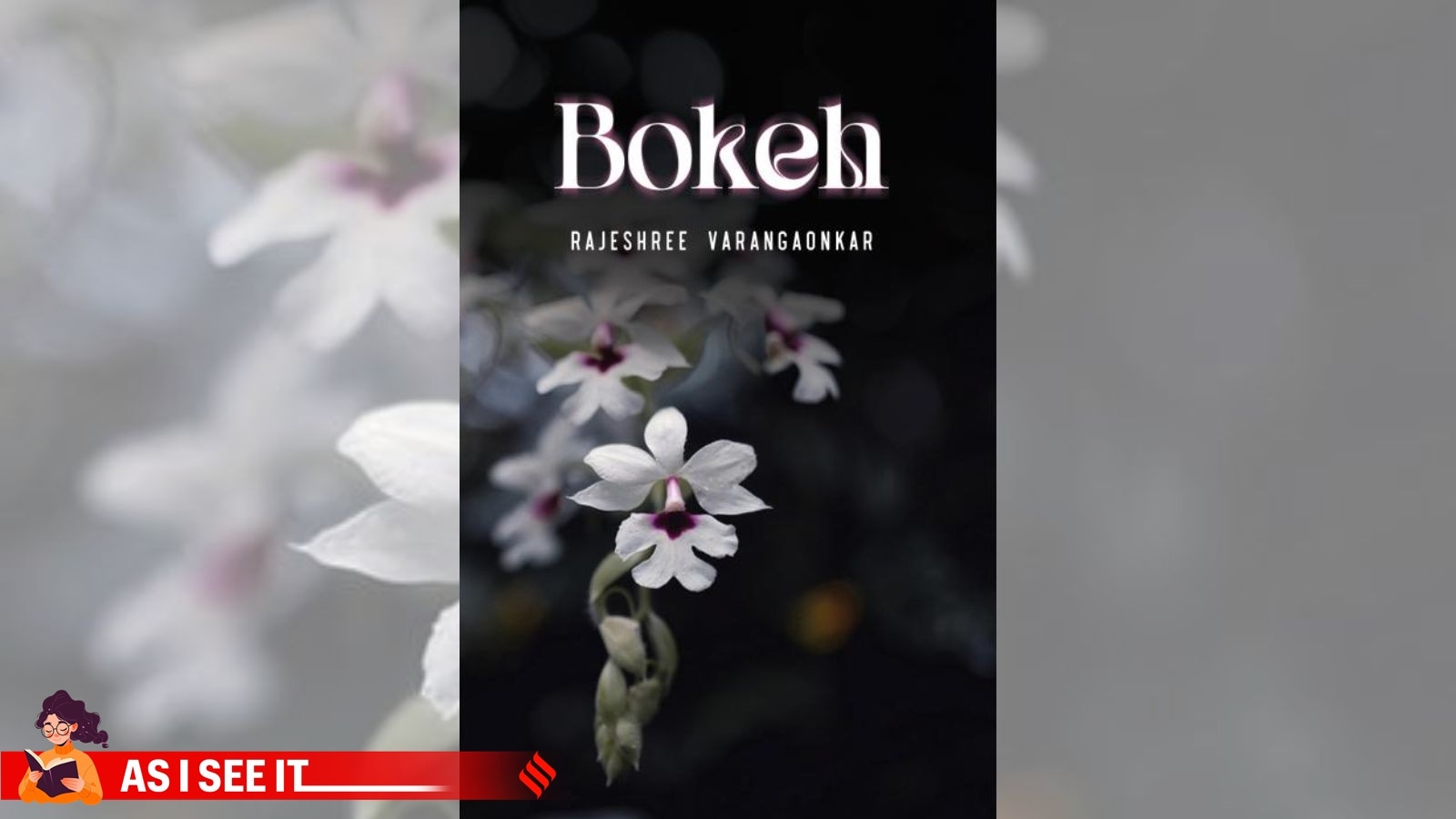
In Bokeh, Rajeshree Varangaonkar brings together eight stories that move across countries, generations, and emotional worlds, yet remain deeply connected through their attention to memory, displacement, grief, and survival.
Born and raised in Mumbai, and having lived in Iraq, Germany, and America, Varangaonkar writes with the sensibility of someone deeply familiar with migration, cultural dislocation, and the emotional fractures that accompany modern life.
The stories in this collection move from Baghdad during the Iraq War to immigrant suburbs in America, from political unrest in Hungary and Iran to intimate domestic spaces in India and Manhattan.
Yet beneath these shifting geographies lies a remarkable emotional continuity, reflecting the author’s recurring focus on blurred lives, fractured memories, and the lingering echoes of what endured across the worlds she inhabited, or she imagined.
Reading the collection feels less like reading separate stories and more like moving through different fragments of the same larger human condition. What makes the collection especially compelling is the way large historical events are consistently filtered through ordinary lives. Varangaonkar is not interested in politics as spectacle. Instead, she focuses on the emotional residue political events leave behind in private memory.
In Kamil, the Iraq War is experienced not through military strategy or headlines, but through Priya’s recollections of childhood Baghdad. The story is filled with sensory details: sandstorms, palm trees, school drills, family photographs, and her attachment to Kamil, the family driver. The emotional force of the story emerges through small gestures rather than dramatic declarations.
Kamil washing grapes for Priya by the roadside, waving endlessly at the airport after her family leaves Iraq, or comparing Iraqis to palm trees that “bend but do not break” gradually transform the story into a meditation on exile and loss. By the end, Baghdad itself becomes ghostlike, surviving only through fragments of memory.
Story continues below this ad
That same concern with ordinary people trapped within larger systems reappears in The Mob Specialist, though in a very different style. Here, Varangaonkar uses satire and absurdism to expose how the poor are repeatedly manipulated by politics, nationalism, and power. The story follows the same man reborn into different historical moments across Iran, Hungary, India, and elsewhere, only to die each time as part of a violent mob.
The heavenly bureaucracy overseeing his repeated deaths creates moments of dark humour, but beneath the satire lies something deeply tragic. Mikhat, Tamas, and Ram Prasad are not ideological revolutionaries. They are impoverished men trying to survive. The story’s final realization, that “it had always been about money,” strips away the grand language of politics and reveals the economic desperation hidden underneath.
Several stories in the collection are equally concerned with fractured identity and emotional isolation. In the Closet is perhaps the richest example of this. Paresh, who renames himself “Parry,” spends his life performing versions of himself for others. He performs success, Americanness, masculinity, professional competence, and even marriage, while internally remaining deeply insecure and emotionally stunted.
The story slowly exposes the contradictions within him. He repeatedly insists that he loves the people around him, his wife, son, parents, and “the kid,” yet his actions reveal emotional distance and self-absorption. His discomfort around successful Indians, his obsession with appearances, and his desperate attachment to younger male figures point toward a man who has spent years suppressing parts of himself. The final return of Gujarati phrases into his thoughts becomes quietly devastating because language itself exposes the identity he spent decades trying to erase.
Story continues below this ad
What ties many of these stories together is Varangaonkar’s fascination with people who exist in-between: between countries, classes, emotional states, belonging and alienation. Once Upon a Time in Calcutta and Bokeh both explore urban loneliness and fractured relationships through vivid sensory landscapes. The title story, Bokeh, becomes especially important in understanding the collection as a whole.
 An example of Bokah in photography. (Source: Public Domain)
In photography, “bokeh” refers to the aesthetic blur that remains in the background of an image. Varangaonkar transforms this visual concept into an emotional metaphor. The story follows a grieving woman in Manhattan struggling to cope with the death of her husband in the Mumbai terror attacks, while her father attempts to guide her back toward life through stories from his own childhood.
By the end, his advice to “bring your life back into focus” while allowing memory to remain “in the background” quietly captures the emotional structure of the entire collection. Across these stories, grief and memory never disappear completely. They remain present like blurred forms behind the sharper details of everyday survival.
Other stories deepen these concerns in different ways. Bai shifts toward domestic spaces and invisible labour, drawing attention to the hierarchies embedded within everyday life. The Labor of Individuality examines the exhausting pressure of constructing identity in a world obsessed with performance and uniqueness. Even Contrapasso, with its darker philosophical undertones, continues the collection’s larger concern with guilt, suffering, and emotional consequence.
Story continues below this ad
Stylistically, the collection is ambitious and often lyrical. At times the prose becomes dense and reflective, occasionally over-explaining its philosophical ideas, but the strongest moments emerge through emotionally precise images rather than abstraction. A child crouching beneath a school desk during an air-raid drill. A poor labourer clutching money for his family even after death. A middle-aged man rehearsing confidence through fake business calls. A grieving daughter slowly learning to live alongside memory rather than erase it. These are the moments that linger.
More than anything else, Bokeh is interested in survival. Not heroic survival, but ordinary survival: the kind carried quietly by migrants, workers, lonely men, grieving women, and displaced children. Again and again, the stories suggest that history is not only shaped by leaders, wars, and ideologies, but also by the private griefs and emotional negotiations of ordinary people trying to endure them.
Like distant lights dissolving into the blur of a rain-soaked cityscape, these stories linger long after the final page.
Rajeshree Varangaonkar leaves the reader wandering through fractured memories, abandoned streets, crowded stations, and quiet rooms, carrying the ache of lives that continue flickering softly beyond the visible frame. In Bokeh, as in life itself, what fades into the blur does not disappear; it quietly remains. The blur, finally, becomes the place where memory survives.